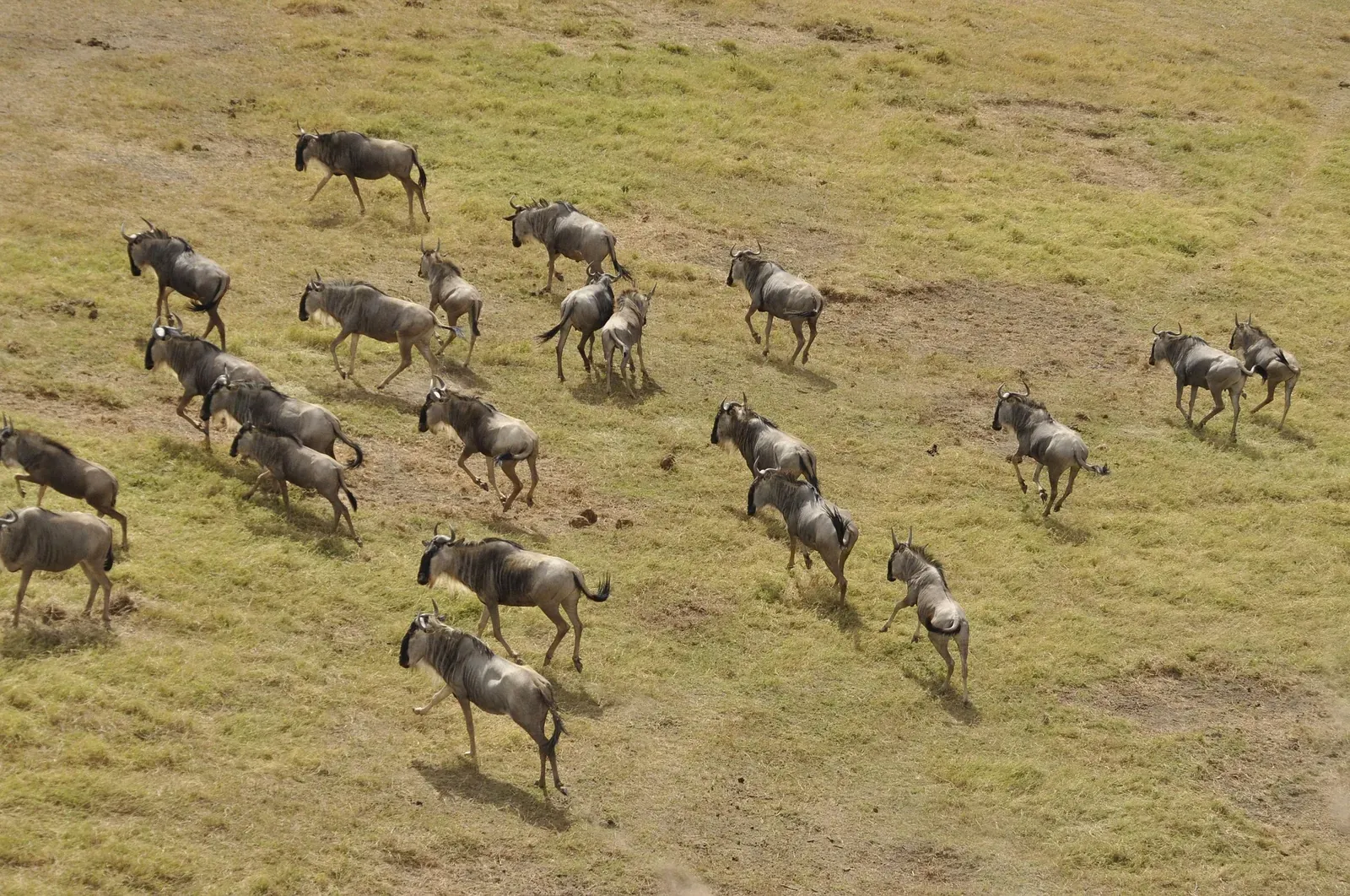
The stars of the Great Migration: roughly a million and a half animals moving in a continuous cycle between Tanzania and Kenya.
The blue wildebeest is the central character of East Africa’s greatest wildlife event. In the Serengeti–Mara ecosystem, well over a million wildebeest, joined by hundreds of thousands of zebra and gazelles, follow the rains in a roughly circular route. Understanding the animal helps you time your safari and appreciate what you are watching.
Quick FactsAround 80 kilometres per hour over short distances.
Well over a million in the Serengeti–Mara ecosystem.
Mainly January to March in the southern Serengeti and Ndutu.
Typically July to October at the Mara and Grumeti rivers.
Wildebeest speed tops out at roughly 80 kilometres per hour in a sprint, quick enough to evade many predators. Their strength lies in numbers: a vast herd confuses hunters, and calves can run within minutes of birth.
The herds follow rainfall and fresh grass. They calve in the southern Serengeti and Ndutu in early in the year, move north and west through central and western Serengeti, then reach the Mara River and Kenya’s Maasai Mara from around July to October, before returning south. The timing shifts with the rains, so no calendar is exact.
Crossing the Mara and Grumeti rivers is the most dramatic moment, with crocodiles waiting and steep banks to climb. Waiting for a crossing can take hours or days; success depends on patience and a good guide.
In the short-grass plains of the southern Serengeti, hundreds of thousands of calves are born within a few weeks. The concentration draws lions, cheetahs and hyenas. See our Tanzania rainy season guide.
For crossings, aim for the Mara or northern Serengeti July to October: see the Maasai Mara and Serengeti pages and the 7-day wildebeest migration safari. For calving, go January to March. Related reading: gazelle vs antelope.
Wildebeest look odd, with a heavy front, thin hindquarters and a beard, but their build is excellent for long-distance travel. They graze short grass, drink daily when water is available and form huge mixed herds with zebra, which benefit from each other’s senses. Males defend small territories during the rut in May and June, and bellow with a distinctive grunting call that carries across the plains.
The migration is a moving buffet. Lions, spotted hyenas, cheetahs, leopards and crocodiles all rely on it at different points. Watching cheetahs work the edges of the herd, or crocodiles ambush at river crossings, shows how the migration shapes the whole ecosystem.
Frequently Asked QuestionsRoughly 80 kilometres per hour in short bursts.
It is continuous. Calving is January to March, and river crossings July to October.
Well over a million in the Serengeti–Mara ecosystem.
Yes, wildebeest are a type of antelope.
The Serengeti and Maasai Mara, depending on the month.
We place you where the herds are for your travel dates.