Two rainy seasons shape the Tanzania safari calendar, and the green months are often the best value of the year.
Tanzania has two rainy seasons: the long rains, from roughly March to May, and the short rains, from about November to December. Between them lies the dry season from June to October, which is the busiest and most expensive time to travel. Many travellers assume that rain means a ruined safari, but the reality is more nuanced. The green season offers lush landscapes, newborn animals, fewer visitors and lower prices, and rain rarely lasts all day.
Quick FactsRoughly late March to May; the heaviest period, often with afternoon downpours.
Roughly November to December; lighter and shorter, often in the afternoon.
June to October; peak season for wildlife viewing and for the Mara River crossings.
January to March in the southern Serengeti and Ndutu area.
January and February are warm and relatively dry, with hundreds of thousands of wildebeest calving in the southern Serengeti and Ndutu plains. March to May are the long rains: roads can be muddy, some camps close and humidity is high, but crowds are thin and rates are low. June to October are the driest months, with clear skies and the best conditions for tracking wildlife around waterholes and rivers. November and December bring the short rains, when green returns and migrant birds arrive.
Landscapes are lush, skies dramatic and photography rewarding. Birdlife peaks, and many antelope and zebra give birth, which draws predators. Because far fewer visitors travel, you often have sightings to yourself. Lodges and camps usually offer lower rates, and availability is easier to secure on short notice. Rain typically falls in short, heavy bursts rather than all day.
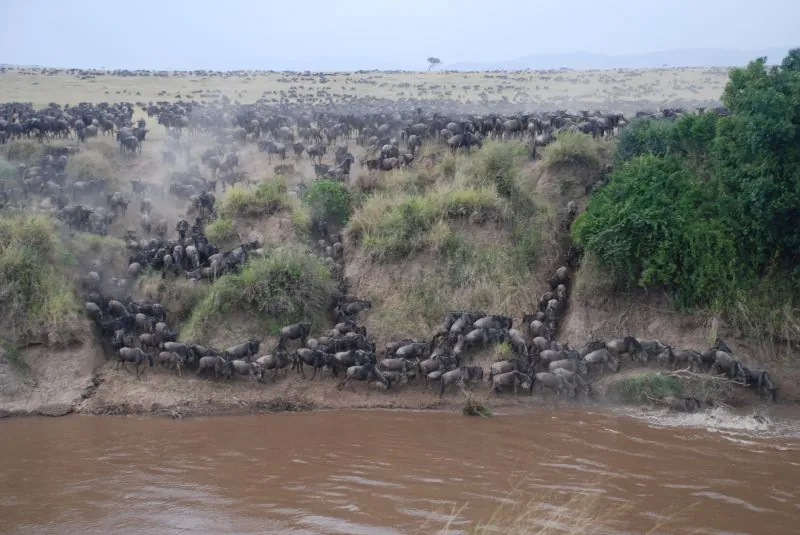
Some roads in remote parks become slow or impassable, and a few camps close completely in the peak of the long rains. Vegetation is thick, so wildlife can be harder to spot than in the dry season. Humidity and insects increase. Travellers fixed on the Mara River crossings should plan for the dry season instead. See our 7-day wildebeest migration safari.
The southern Serengeti and Ndutu for calving, Tarangire and Lake Manyara for lush scenery and birdlife, and the Ngorongoro Crater, which is a year-round destination. Remote parks like Katavi and Ruaha are more difficult to reach in the long rains. Compare options on our Serengeti page and Ngorongoro page.
Pack a lightweight rain jacket, quick-drying clothes, a waterproof bag for cameras and sturdy shoes. Your safari vehicle will have a roof, and guides adapt game drives to weather. Travel insurance that covers flight changes is wise. For a month-by-month guide across the region, see our best time to visit guide.
Because demand drops, rates for lodges and camps are often substantially lower between April and May than in peak season, and some operators run special offers. Availability is better, so last-minute planning is more realistic. The trade-off is that remote camps may close and flights may be reduced, so your itinerary needs to be built carefully around what is open.
Dramatic skies, saturated greens and clean air make this a favourite season among photographers. Carry a rain cover and silica gel for your gear, and use a beanbag on the vehicle window. Morning light after overnight rain is often the best of the trip, and dust is minimal, so images look crisp.
Frequently Asked QuestionsThe long rains run from about March to May and the short rains from about November to December.
Yes. Landscapes are green, crowds are thin and rates are lower, although some roads and camps are affected in the heaviest rains.
The calving season in the southern Serengeti and Ndutu from about January to March is a highlight, but the Mara River crossings happen later, around July to October.
June to October is the driest and most popular period, while January and February offer calving. It depends on what you want to see.
A rain jacket, quick-drying clothing, a waterproof camera bag and sturdy shoes are advised.
Tell us your dates and what you want to see and we will match the park and season.