English and Swahili are official, Luganda is the most widely spoken local language, and dozens of ethnic groups share the country.
Uganda is one of Africa’s most linguistically diverse countries. Travellers are often surprised to hear dozens of languages in a single day, from Luganda in Kampala to Runyankore and Rukiga in the south-west, Acholi and Lango in the north, and Ateso in the east. The good news for visitors is that English is the main language of government, education and tourism, so communicating is easy.
This guide explains which languages are spoken, how many tribes Uganda has, how to greet people, and what to know before visiting communities.
Quick FactsEnglish and Swahili.
Luganda, spoken mainly in Kampala and the central region.
Commonly cited as 56 tribes; the constitution’s schedule lists 65 indigenous communities.
“Webale” means thank you in Luganda; “Oli otya?” means how are you?
English and Swahili are Uganda’s official languages. English is used in schools, courts, business and the media, while Swahili was formally made official in 2005 and is used in the military and police. In daily life, most Ugandans speak at least one local language, and many speak several.
The most widely spoken local language is Luganda, the language of the Baganda people, which is common in Kampala, Entebbe and the central region. Other major languages include Runyankore and Rukiga in the south-west (home to Bwindi gorilla country), Lusoga in the east, Ateso, Lugbara, and the Luo languages Acholi and Lango in the north.
The figure often quoted is 56 tribes, taken from the 1995 constitution. A later schedule lists 65 indigenous communities, reflecting updated recognition of smaller groups. The largest groups include the Baganda, Banyankole, Basoga, Bakiga, Iteso, Langi, Acholi, Bagisu and Lugbara. Smaller communities, such as the Batwa forest people of the south-west, have distinct cultures and histories.
Because the numbers depend on which official list is used, it is more helpful to think of Uganda as a country of many cultures, each with its own languages, dances, food and traditions.
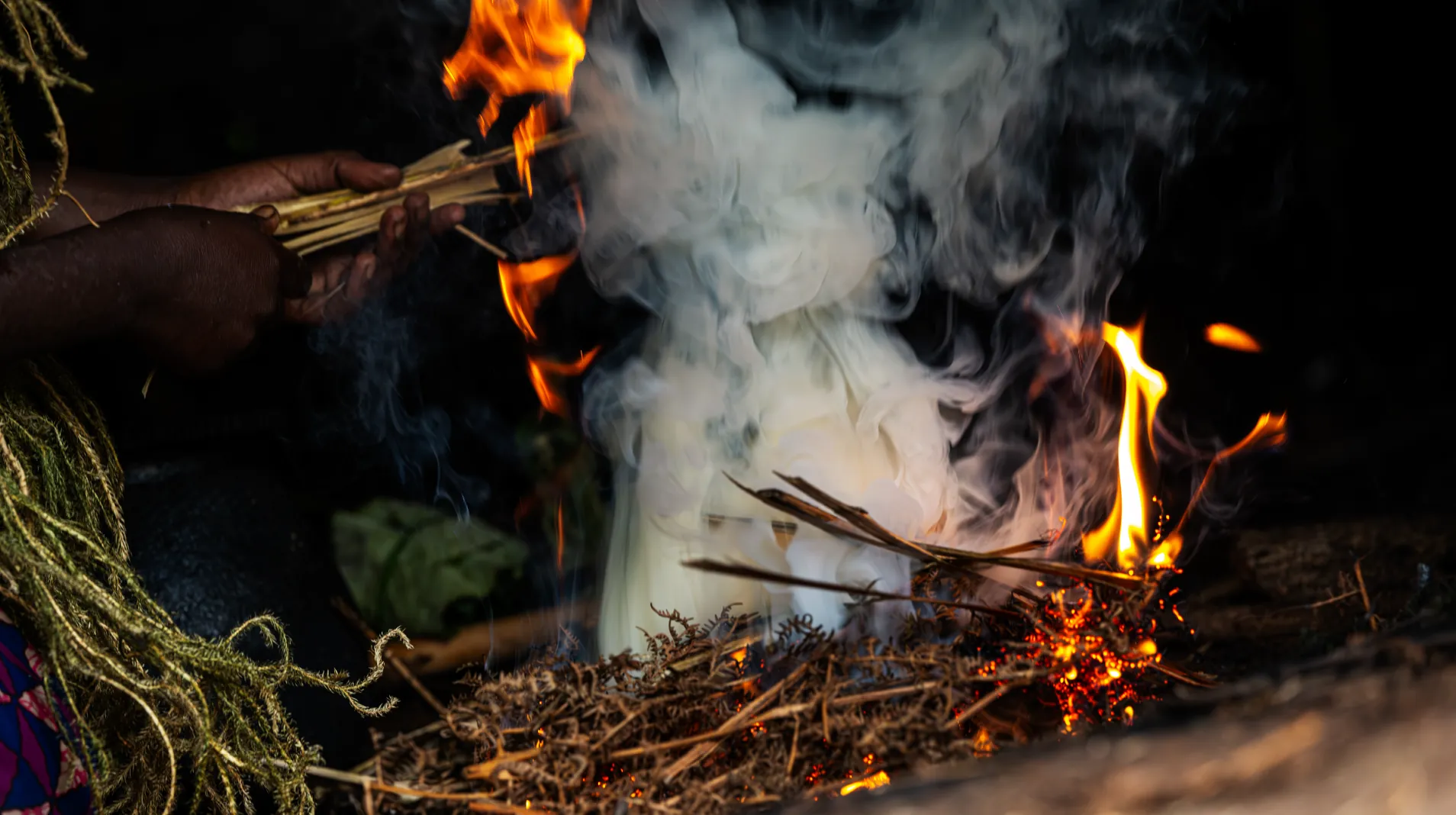
You will rarely need more than English, but a few local words are always appreciated. In Luganda, “Wasuze otya?” is good morning, “Oli otya?” is how are you, “Weebale” or “Webale” is thank you, and “Nsaasira” means please in the sense of asking politely. In Swahili, “Jambo” and “Asante” are widely understood. Greeting someone properly before asking a question is considered polite.
Cultural visits are a highlight of many Uganda safaris, from village walks near Bwindi to Batwa trail experiences and Karamojong visits near Kidepo. Ask before taking photographs, accept refreshments politely, and choose community-run or community-benefit experiences. Our culture and heritage safaris page and the 8-day immersive culture safari show how we plan these visits.
Guides, rangers and porters at Bwindi and Mgahinga speak English, and often local languages such as Rukiga. If you hire a porter, a few words of thanks go a long way. Read our Bwindi gorilla trekking guide for practical preparation.
In the south-west around Bwindi and Mgahinga, Rukiga and Runyankore dominate and guides greet visitors with “Agandi” or “Oraire ota”. Around Queen Elizabeth and Fort Portal you will hear Runyoro and Rutooro, while Murchison Falls and the north bring Alur, Acholi and Lango. In the east, Lusoga and Ateso are common. You do not need to learn them, but noticing the change from region to region is part of what makes a Uganda safari fascinating.
Meals often feature matoke (steamed green banana), posho, beans, groundnut sauce and grilled meat or tilapia. Greetings matter, so take a moment to say hello and ask after someone’s family before getting to the point. Dress modestly in villages, and ask before photographing people, especially children. Respect for elders is a core value across Uganda’s cultures.
Frequently Asked QuestionsEnglish and Swahili are Uganda’s official languages.
Luganda is the most widely spoken local language, especially in Kampala and the central region.
The figure commonly given is 56 tribes, although a later constitutional schedule lists 65 indigenous communities.
No. English is widely spoken in tourism, but a few local greetings are appreciated.
English, Luganda and Swahili are all common, with Luganda most used in daily life.
We add community visits and cultural stops to any Uganda safari.