Swahili and English, more than 120 ethnic groups, and a culture that blends African, Arab and Indian Ocean influences.
Tanzania is known for its wildlife, but its people are just as much a part of the experience. The country has a strikingly peaceful national identity built around the Swahili language, and more than a hundred ethnic groups live side by side. Whether you are on a Serengeti game drive or walking through Stone Town, understanding a little about language, religion and culture makes your visit richer and more respectful.
Quick FactsSwahili is the national language; English is also official and widely used in tourism and higher education.
More than 120, with the Sukuma the largest. The Maasai, Chagga, Hehe and Haya are among those travellers hear about.
Mainly Christianity and Islam in roughly comparable numbers; Zanzibar is overwhelmingly Muslim.
“Jambo” means hello; “Asante” means thank you; “Karibu” means welcome.
Swahili (Kiswahili) is Tanzania’s national language and is spoken by the large majority of the population as a first or second language, which helps unite a country of many ethnic groups. English remains an official language, used in government, higher education and tourism, so safari guides, lodge staff and tour operators speak it fluently.
The main tourist phrases are easy: “Jambo” or “Habari” for hello, “Asante sana” for thank you very much, “Pole pole” for slowly, slowly, and “Hakuna matata” for no worries, which every safari guide will use with a smile.
Tanzania has more than 120 ethnic groups. The Sukuma, who live south of Lake Victoria, are the largest. Others include the Chagga on the slopes of Kilimanjaro, the Haya near Lake Victoria, the Hehe and Makonde in the south, and pastoral groups such as the Maasai, who live around the Ngorongoro highlands and the Serengeti plains. Hadza hunter-gatherers near Lake Eyasi are another well-known community. Our guide to the Maasai people explains how to engage respectfully.
Christianity and Islam are the two largest religions, with many people also keeping traditional beliefs alongside them. On the mainland the population is mixed, while Zanzibar is almost entirely Muslim. Religious tolerance is a feature of Tanzanian life, but visitors should dress modestly in towns and religious settings, especially in Stone Town.
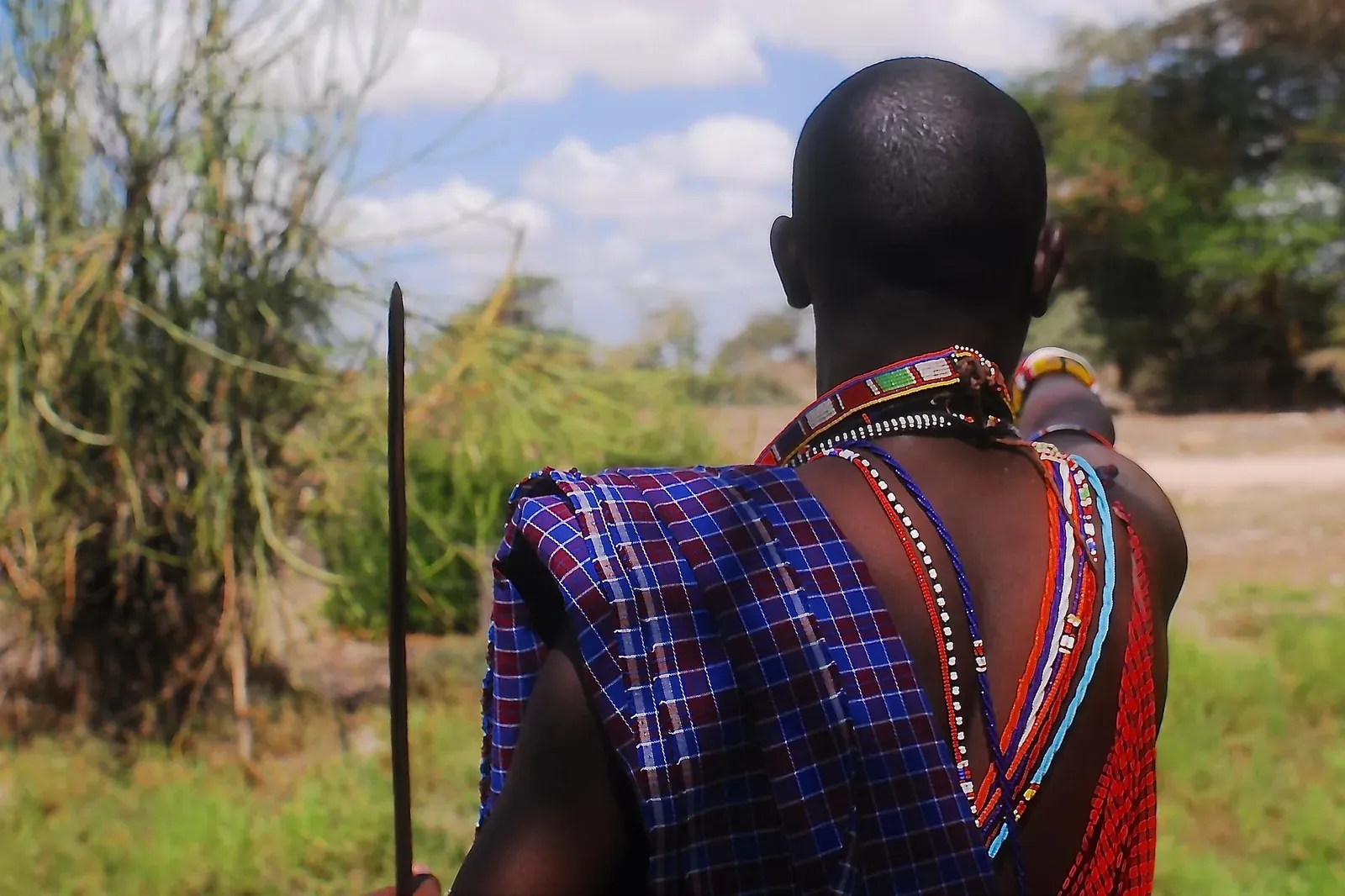
Day-to-day dress in Tanzania blends modern and traditional. Women often wear kanga and kitenge, brightly patterned cotton wraps that often carry proverbs. Maasai men and women wear red or checked shuka cloths, with beaded jewellery whose colours and patterns carry meaning. In Zanzibar, men may wear a white kanzu robe and cap, and women a black buibui or colourful dress. These are everyday clothes, not costumes, so treat photography with courtesy.
Greet people before asking questions, use your right hand to give and receive, ask before taking photographs, and avoid public displays of affection. Tipping guides and camp staff is customary; your Ameera consultant explains how much and how to do it. If you plan a coastal extension, read our Zanzibar page for dress and etiquette tips.
Tanzanian cuisine ranges from ugali (maize porridge) with stew to coastal Swahili dishes of coconut rice, spiced fish and pilau. On Zanzibar, spices such as cloves, cinnamon and cardamom flavour many dishes. Music ranges from taarab, a coastal style influenced by Arabic and Indian traditions, to bongo flava, Tanzania’s popular hip-hop and R&B scene. A tasting evening or spice tour often becomes a highlight of a trip.
A friendly greeting opens doors. Shake hands lightly, use your right hand, and ask how the person is before anything else. Tips are customary for guides, drivers and camp staff, and we brief every guest on typical amounts before they travel. Always ask permission before photographing people, and be prepared for polite refusals.
Frequently Asked QuestionsSwahili is the national language and English is also official.
More than 120 ethnic groups, with the Sukuma the largest.
Christianity and Islam are the main religions, with Zanzibar mostly Muslim.
Everyday clothing is modern, while kanga, kitenge and Maasai shuka are traditional garments widely worn.
Yes, particularly in tourism, though a few Swahili phrases are appreciated.
We add guided cultural stops to Tanzania safaris and Zanzibar extensions.