Far from a mere scavenger, the spotted hyena is a clever, social hunter that lives in female-led clans.
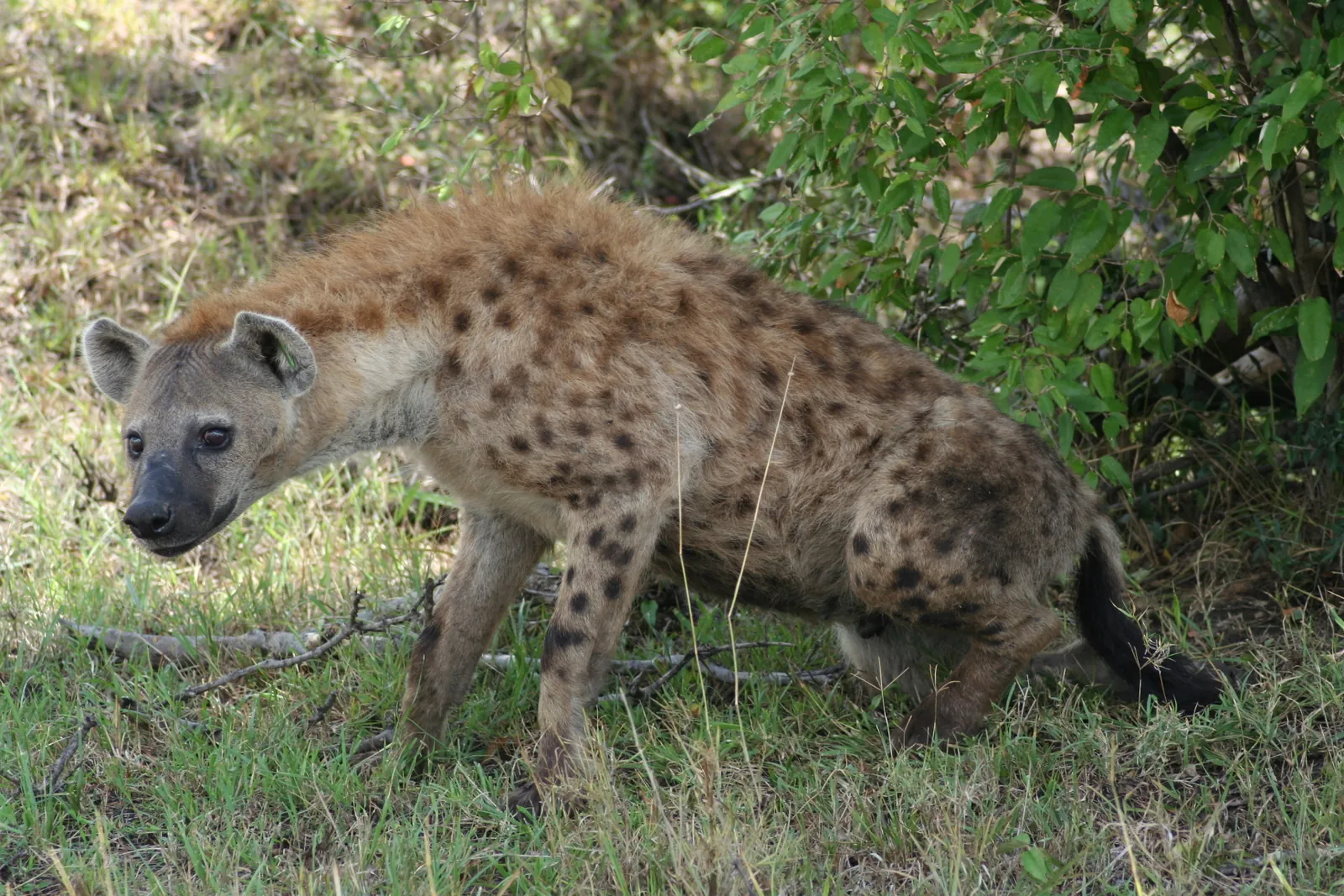
Spotted hyenas have a poor reputation, shaped by cartoons and folklore, but guides and biologists often count them among Africa’s most fascinating animals. They are highly social, intelligent and effective hunters, and in many ecosystems they kill most of the food they eat. Seeing a clan at a den with cubs is one of the great small pleasures of a safari.
Quick FactsClans led by females, which are larger and dominant over males.
Hunt zebra, wildebeest, antelope and more, and also scavenge.
Whoops, giggles and growls; the “laugh” signals excitement or submission.
Ngorongoro Crater, Maasai Mara, Serengeti and Amboseli.
Spotted hyena clans are matriarchal, with females dominant and larger than males. Rank is inherited, and cubs of high-ranking mothers get priority at kills. Clans can number from a handful to several dozen animals, depending on prey availability. Cubs are raised in communal dens, and you may see them playing near the entrance.
Hyenas are powerful predators with enormous jaws that can crush bone. They hunt cooperatively, often at night, and are capable of running down prey over long distances. In many areas, lions steal kills from hyenas as often as the reverse. The belief that they are mainly scavengers is outdated.
Lions and hyenas compete for prey and often clash. At a kill, a large clan can drive off a small group of lions, while a big male lion can send hyenas scattering. Watching these encounters is a staple of Ngorongoro and Mara game drives.
Hyenas use a range of vocalisations. The classic “whoop” carries for kilometres at night, and the laughing sound is a sign of nervousness or excitement. Guides often recognise individuals by their spot patterns.
Ngorongoro Crater has a famously dense hyena population, and the Mara and Serengeti are also excellent. See our Ngorongoro, Maasai Mara and Amboseli pages, or learn about lions.
The Ngorongoro Crater is among the best places in Africa to watch hyena social life. Because the crater is a closed ecosystem, clans hold well-defined territories, and dens are often visible from the road. Guides can tell you which clan you are watching and sometimes point out individuals by their markings. Visitors often spend hours simply watching cubs tumble outside a den.
Hyenas are most active at dawn, dusk and at night. If your camp permits night drives, ask about them. During the day, look for hyenas resting in water pools to cool down, and for communal dens marked by flattened ground and bones. Keep a respectful distance and never approach on foot.
By hunting and scavenging, hyenas help keep prey populations healthy and clean up carcasses. Their large jaws and strong digestive systems allow them to eat nearly all of a kill, bones included, which is why white droppings are a clue to their presence. Removing them from an ecosystem would have knock-on effects for other species.
Frequently Asked QuestionsThey scavenge, but spotted hyenas are also highly effective hunters.
The giggling call usually signals excitement, stress or submission.
Yes. Females are larger and dominate males.
Ngorongoro, the Maasai Mara, the Serengeti and Amboseli.
On guided safari they are not a risk, but keep a safe distance and stay in your vehicle.
We plan game drives around dens, kills and the best light.