Lions can and occasionally do kill people, but on a properly guided safari the risk is very low if you follow the rules.
Lions are apex predators, and large enough to kill a person. Records exist of man-eating lions, including the famous Tsavo lions of Kenya in the late 1890s. In some regions of Tanzania, particularly near the edges of protected areas, researchers have documented hundreds of human deaths from lions over a period of years. These are tragic, and they are almost all linked to people living or working near lions at night, not to tourists in vehicles.
For safari travellers, the key question is practical: how safe is it to be near lions, and what rules keep you safe? This guide answers both.
Quick FactsMost lions avoid humans; a minority become habitual man-eaters, usually when injured, old or short of prey.
Unfenced settlements and farms near parks, especially at night.
Lions see a safari vehicle as one large object and generally ignore it as long as you stay inside.
Never leave the vehicle or lean out unless your guide says it is safe.
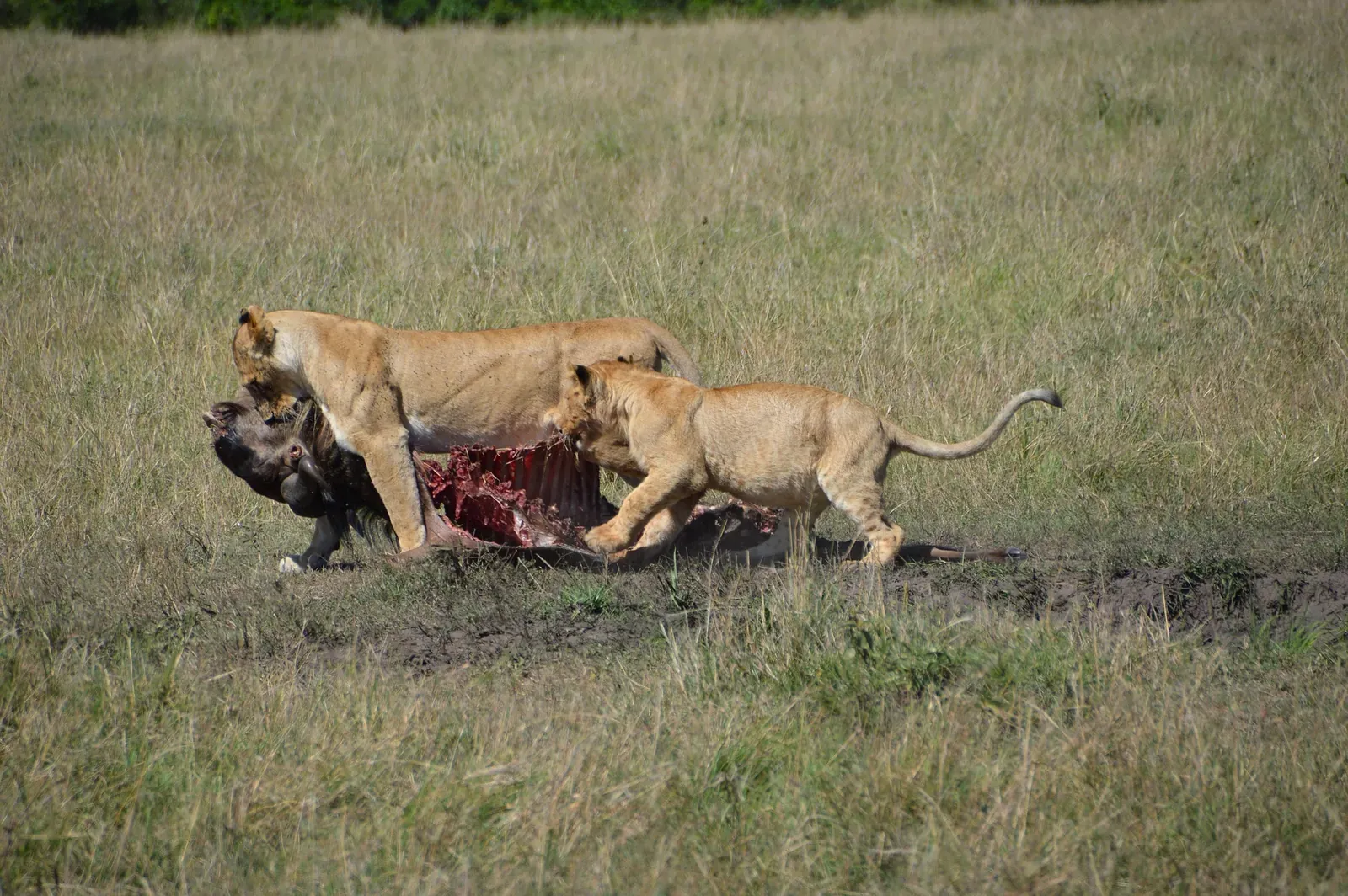
Most lions hunt zebra, wildebeest, buffalo and other prey. Attacks on humans happen when lions are injured, old, or when prey is scarce, or in places where people live or sleep outdoors near lion habitat. Lions hunt mostly at night, and the greatest risk is to people walking or working in the dark. Conservation groups work with communities on predator-proof enclosures and early-warning systems.
A lion looking at a safari vehicle sees a large, unfamiliar shape and not individual people. As long as passengers sit, speak quietly and keep arms inside, the vehicle is read as a single object. Problems arise when people stand up, lean out or make sudden noises, which can break the “single shape” effect. Your guide will brief you on these rules at the start of the trip.
Walking safaris are led by armed rangers who read the environment and keep a safe distance. Where lions are around, guides change direction or retreat quietly. Our walking safari page describes how we select areas and guides.
Stay in the vehicle on game drives, follow your guide’s instructions without argument, do not walk around camp at night without an escort (camps will accompany you to your tent), keep tent flaps zipped, and never feed or approach wild animals. These rules apply across Kenya, Tanzania and Uganda. See also our health and safety guide.
Lions are easy to find in the Maasai Mara, the Serengeti and the Ngorongoro Crater. Uganda’s Ishasha sector in Queen Elizabeth National Park is famous for tree-climbing lions. Read about our Big Five safaris.
Studies of lion attacks in Tanzania have found that incidents cluster around farms, villages and plantations that border wild areas, and that many victims were outdoors at night. Attacks tend to rise when prey animals are scarce, when crops draw bushpigs that lions follow, or when lions are displaced. Understanding this pattern has helped conservationists develop practical measures such as better night-time housing for livestock and community patrols.
If you find yourself on foot with a lion nearby, do not run. Stand tall, face the animal, keep your guide between you and the lion and back away slowly if instructed. Most lions that show interest in people do so out of curiosity or territorial display, and retreat when met with calm. Again, the best protection is having an experienced guide and following every instruction.
Frequently Asked QuestionsOccasionally, yes, but this is rare and usually involves lions living near settlements. On guided safaris the risk is very low.
Very unlikely if you stay inside and keep arms and heads within the vehicle.
Yes, with an experienced armed guide who follows strict protocols.
Stay calm, do not run, and follow your guide’s instructions.
The Maasai Mara, Serengeti, Ngorongoro and Queen Elizabeth National Park are classic lion destinations.
Our guides and partner camps follow strict safety standards.