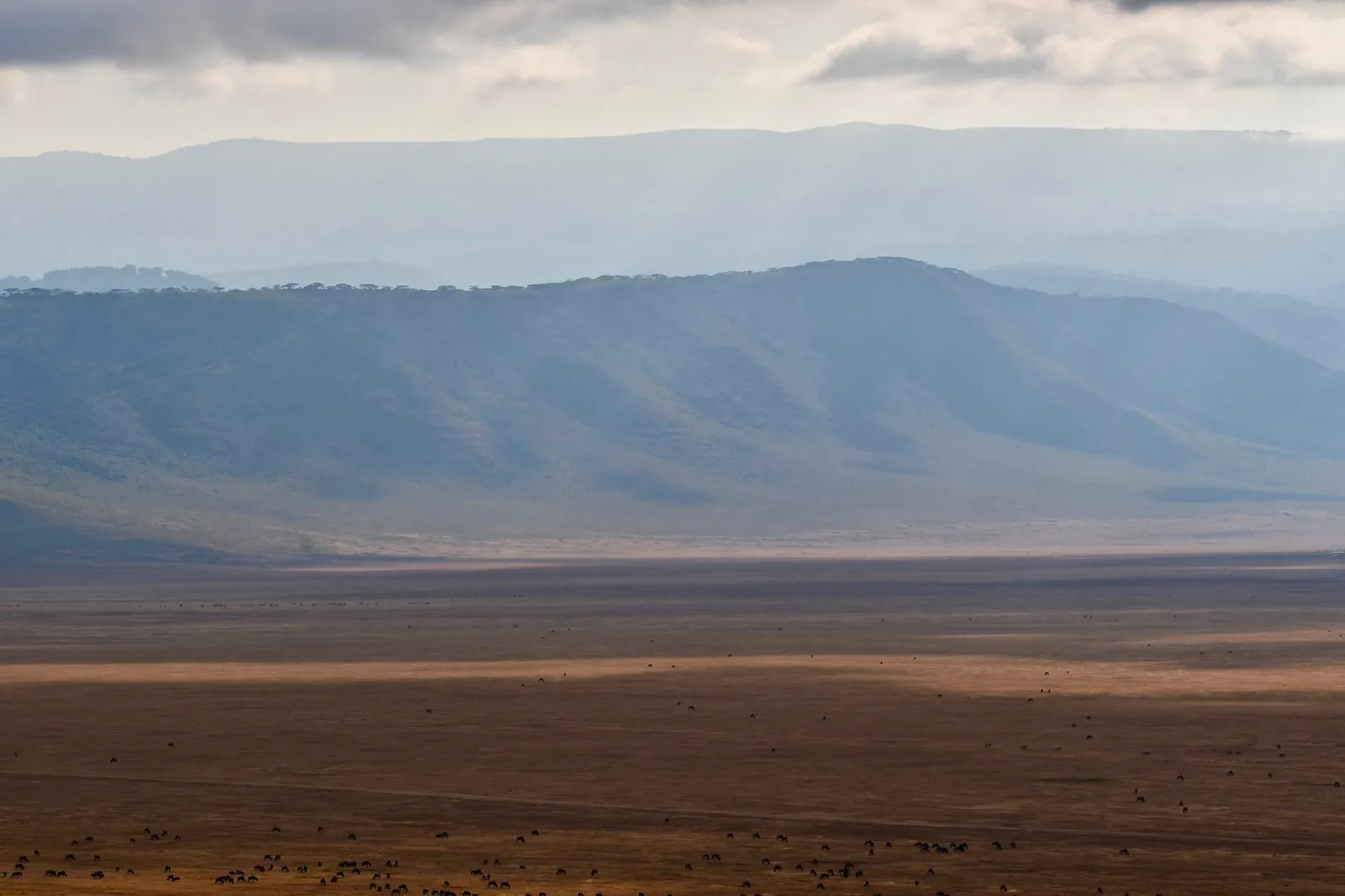
A dry ravine on the road between Ngorongoro and the Serengeti, and one of the most important archaeological sites in the world.
Olduvai Gorge is a steep-sided ravine in northern Tanzania, roughly 50 kilometres long and in places around 90 metres deep, cut into the plains that stretch between the Ngorongoro Crater highlands and the Serengeti. It lies inside the Ngorongoro Conservation Area, and its layers of volcanic ash and sediment have preserved fossils and stone tools that span almost two million years.
Olduvai Gorge in Tanzania is, for most travellers, a stop on the drive between Ngorongoro and the Serengeti, and a rewarding one. A small site museum, a guide who can explain what you are looking at, and a viewpoint over the gorge make it one of the most thoughtful hours of a northern Tanzania safari.
Quick FactsNgorongoro Conservation Area, northern Tanzania, between the crater highlands and the Serengeti.
Fossils and stone tools that shaped our understanding of early human evolution.
Louis and Mary Leakey, who led excavations here from the 1930s onward.
One to two hours, including the museum and a short talk at the gorge.
Olduvai became world famous through the work of Louis and Mary Leakey. In 1959 Mary Leakey discovered a remarkable skull of an early hominin, Paranthropus boisei, once nicknamed “Nutcracker Man” for its huge teeth and jaws, and later finds at the site included Homo habilis, an early member of our own genus associated with simple stone tools. The gorge is often described as part of the cradle of humankind because of the depth and continuity of its record.
Excavations and research have continued for decades, and the exposed layers show how the climate and landscape of the region changed over time. Plain as it looks, the gorge is a layered book of early human history.
The small museum near the gorge rim displays fossils, tools and casts, and explains the site’s stratigraphy. A guide can then walk you to a viewpoint where the layers are visible in the walls of the gorge. Opening hours and arrangements change, and permits and fees are part of Ngorongoro Conservation Area entry, so your Ameera consultant confirms details when planning.
South of Olduvai lies Laetoli, where Mary Leakey’s team found a trail of fossilised footprints made by early hominins who walked upright roughly 3.6 million years ago, preserved in volcanic ash. Public access to the footprints themselves is limited, but the story is told in museum displays and by guides. Together with Olduvai they make the Ngorongoro highlands as significant for human origins as for wildlife.
Olduvai is most easily visited on the transfer between Ngorongoro and the Serengeti, which already takes you across the Serengeti plains. Pair it with a visit to the crater for a day that covers deep history and wildlife. Try our Ngorongoro Crater safari and Serengeti safari pages, or look at the 8-day Classical Tanzania safari that links these highlights.
The Ngorongoro Conservation Area is also home to Maasai communities who share land with wildlife. Read our guide to the Maasai people for context before you visit, and ask your guide about respectful ways to learn more.
The walls of the gorge reveal several beds of volcanic ash, lake sediments and river deposits, each representing a different period. Archaeologists have used these layers to date finds and to reconstruct the environment in which early humans lived, a mix of lake shore and grassland that was probably not unlike parts of the Serengeti today. Stone tools found in the lowest beds are among the earliest known, which is why a short stop here can change how you think about the animals you see afterwards.
Go with a guide who has read about the site, ask to see the replica skulls in the museum, and stand quietly at the viewpoint for a few minutes. Bring water and a hat, as the gorge area is exposed and hot by late morning. If you travel with children, ask the museum staff for the story of Mary Leakey’s discovery; it is a good way to connect human origins with the wildlife you are about to see.
Frequently Asked QuestionsIt is in northern Tanzania within the Ngorongoro Conservation Area, between the Ngorongoro Crater and the Serengeti.
The gorge was first noted by a German entomologist in the early 1900s, and became famous through the excavations of Louis and Mary Leakey from the 1930s.
One to two hours is enough for the museum and a short talk at the gorge.
Yes, especially for travellers interested in human origins. It also breaks up the long transfer between Ngorongoro and the Serengeti.
Access to the footprints themselves is restricted. Museum displays and guides explain the discovery.
Pair it with the crater floor and the highlands.
Explore →The wider Northern Circuit context for this stop.
Explore →Ngorongoro, Serengeti and the route between.
Explore →Parks, seasons and routes across the country.
Explore →We build history and wildlife into the same Tanzania itinerary.