Tanzania’s largest city and main commercial hub, and the gateway for southern safaris and Zanzibar ferries.
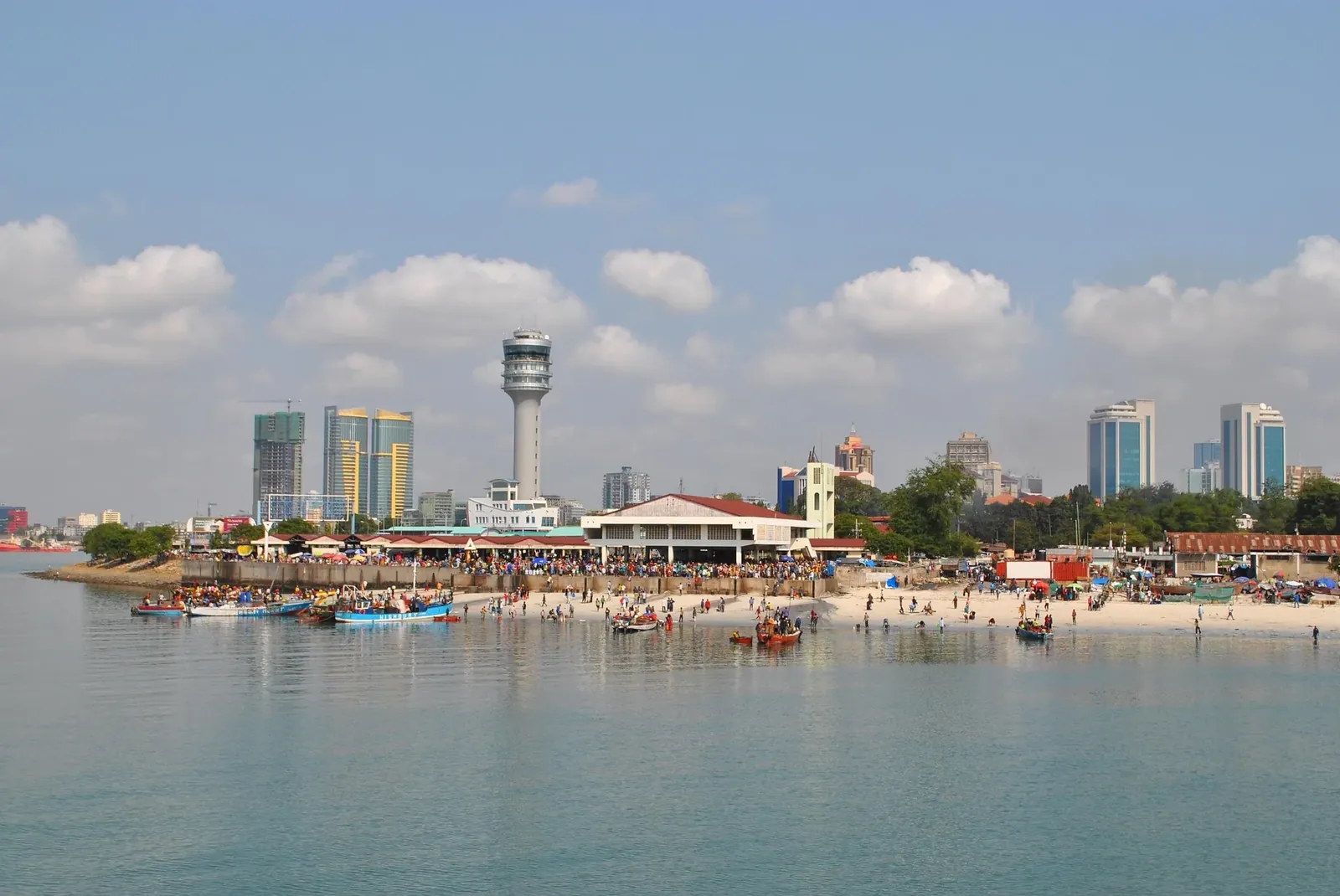
Dar es Salaam is the largest city in Tanzania and its principal port and business centre. Dodoma, in the centre of the country, is the official capital, but Dar es Salaam remains where most international flights arrive, where most businesses are based, and where many southern Tanzania and Zanzibar itineraries begin or end. The name comes from Arabic and means roughly “haven of peace”.
For safari travellers the city is mostly a transit point, but a night or two here can be rewarding if you plan your time well.
Quick FactsTanzania’s largest city and commercial centre; the official capital is Dodoma.
Julius Nyerere International Airport (DAR) is the main international gateway to southern Tanzania.
Fast ferries and short flights connect Dar es Salaam with Zanzibar.
Hot and humid year-round, with heavy rains roughly March to May.
Most visitors arrive at Julius Nyerere International Airport, a short drive from the centre; road traffic can be heavy, so allow generous time for transfers. Taxis, ride-hailing and hotel cars are the standard way to move around. Many travellers use Dar es Salaam as a hub for flights to the southern parks and to Zanzibar, and to reach northern safari towns they connect through Kilimanjaro or Arusha.
Highlights include the National Museum and House of Culture, the Village Museum with its traditional dwellings, the lively Kariakoo Market, the seafront and Msasani Peninsula for restaurants, and boat trips to nearby islands such as Bongoyo for a beach afternoon. It is also possible to wander the old German-era quarter near the harbour. A half-day is enough for the main sights.
Southern Tanzania parks such as Nyerere (formerly Selous) and Ruaha are reached by small aircraft from Dar es Salaam, which makes the city the natural starting point for a quieter safari. See our 10-day Southern Tanzania safari for a sample route.
Fast ferries link Dar es Salaam with Zanzibar in roughly two hours, and light aircraft take about 20 to 30 minutes. If you are pairing a safari with the coast, read our Zanzibar guide and the Mnemba Island page.
Hotels cluster along the seafront and in Masaki and Oyster Bay. The cooler, drier months from June to October are the most comfortable. See our best time to visit guide and the Tanzania rainy season guide.
Start with breakfast near the Msasani Peninsula, then visit the Village Museum to see how different Tanzanian peoples build their homes. Late morning, wander the National Museum, where displays include early human fossils from Olduvai Gorge. Have lunch of grilled fish or nyama choma near the harbour, and spend the afternoon at the Kariakoo Market if you enjoy crowds, spices and street food, or take a boat to Bongoyo Island for sand and snorkelling. Finish at a rooftop restaurant as the heat fades. Plan your evening around traffic; a short trip can take far longer at rush hour.
Even if you never plan to linger, the city is the logistical heart of southern Tanzania. It is where international flights connect with small aircraft to Nyerere and Ruaha, where the Zanzibar ferries leave from, and where trains and roads link the coast to the interior. Building a comfortable buffer day on either side of a safari reduces the risk of missed connections, and gives you time to adjust to the heat and humidity of the coast.
Frequently Asked QuestionsNo. Dodoma is the official capital, but Dar es Salaam is the largest city and main commercial centre.
By fast ferry, in roughly two hours, or by short flight in about 20 to 30 minutes.
One night is enough for most safari travellers; two nights allows a museum visit and a seafront evening.
It is the gateway to southern parks such as Nyerere and Ruaha; northern parks are reached through Arusha or Kilimanjaro.
We handle airport transfers, internal flights and the ferry so your first day is easy.