The tallest animal on Earth lives in the savannahs of Africa, and East Africa is home to several distinct types.
Giraffes are among the most recognisable animals in Africa, standing up to around five and a half metres tall. They are also more varied than many travellers realise. Recent genetic research suggests there may be four distinct species, and East Africa holds several of the forms. This page answers common questions: where giraffes live, what threatens them, whether they are dangerous, and where you can see them on safari.
Quick FactsUp to about 5.5 metres for big males.
Often recognised as four: northern, southern, Masai and reticulated.
Masai giraffe (Kenya and Tanzania), reticulated (northern Kenya) and Rothschild’s (Uganda and Kenya).
Leaves, especially from acacia trees, reached with a long, tough tongue.
Giraffes live across savannah and open woodland in eastern, central and southern Africa. In East Africa the Masai giraffe is common in the Maasai Mara, Serengeti, Tarangire and Amboseli. Reticulated giraffes, with sharp, polygon-shaped patches, live in northern Kenya, including Samburu. Rothschild’s giraffes survive in Murchison Falls National Park in Uganda, Lake Nakuru and conservancies in Kenya, and Akagera in Rwanda.
Giraffes are generally calm, but they are powerful. A kick can injure or kill a lion, so keep a respectful distance and never approach on foot. On safari they are among the easiest animals to photograph.
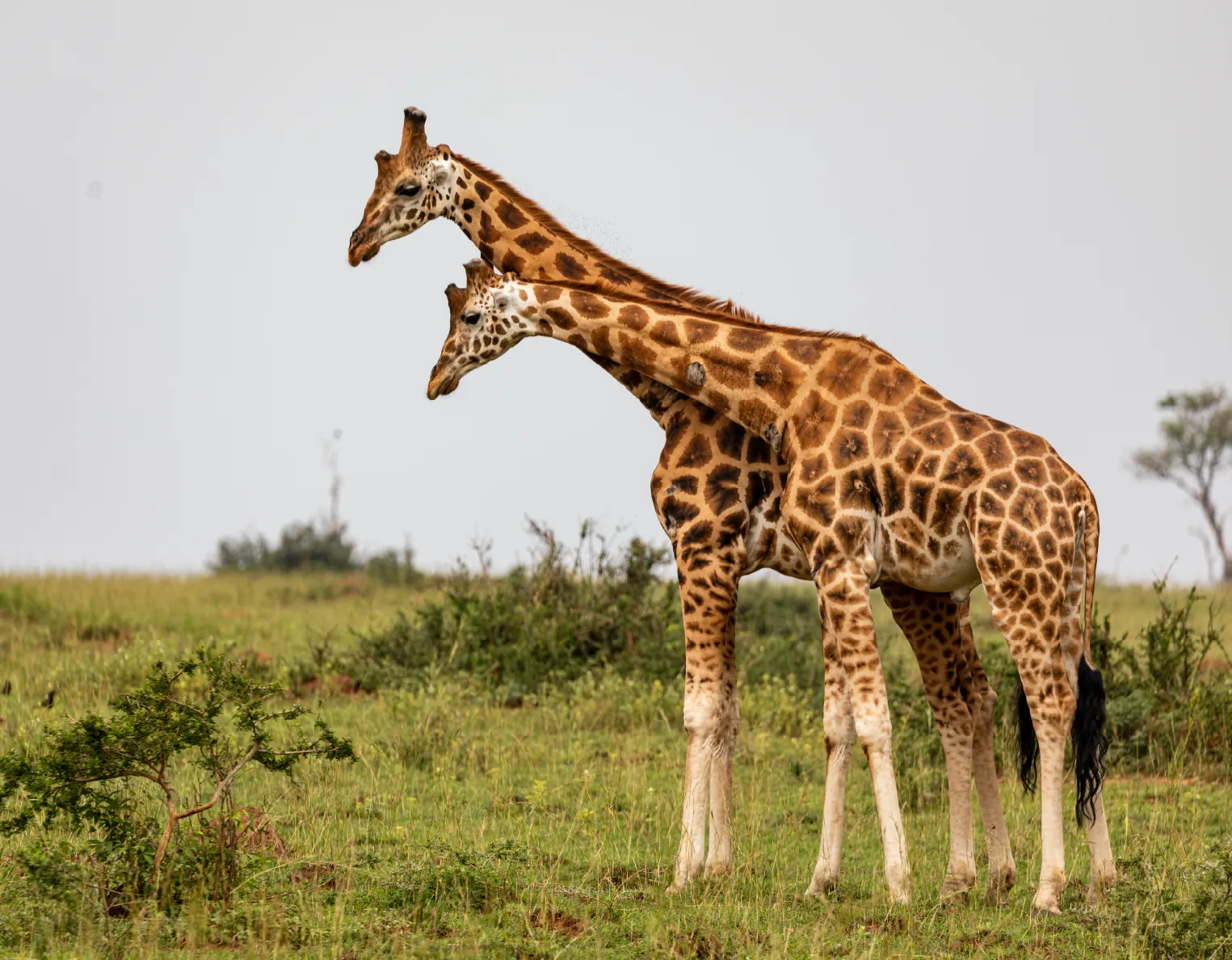
Adult giraffes are rarely killed by predators, but lions will attack when they can, and hyenas and crocodiles take calves. The greater threat is loss of habitat and poaching. Several giraffe populations are declining, which is why conservation programmes matter.
No. They are wild animals with huge space and dietary needs. Sanctuaries and breeding centres exist to protect endangered forms, not for private ownership.
The Giraffe Centre in Nairobi, run by a conservation charity, allows visitors to feed Rothschild’s giraffes from a raised platform. Giraffe Manor, in the same area, is a boutique hotel where giraffes visit guests at breakfast; read our Giraffe Manor page. In the wild, see giraffes in the Maasai Mara, Samburu, Murchison Falls and Nairobi National Park.
A giraffe’s neck contains the same number of vertebrae as ours, just seven, but each one is vastly elongated. The heart is large and powerful to pump blood up to the head, and special valves and blood-vessel networks protect the brain when the animal drinks. Giraffes sleep very little, often just a few short snatches a day, and give birth standing up, so newborn calves drop to the ground from a height of about two metres.
Giraffe numbers have fallen significantly over recent decades, leading some experts to call it a silent extinction. Translocations of Rothschild’s giraffes to places such as Akagera in Rwanda, and community-managed conservancies in Kenya, have helped protect them. Visiting these areas and choosing responsible operators supports the work.
Frequently Asked QuestionsRecent genetic research suggests four species, although classification is still discussed.
The Maasai Mara, Serengeti, Samburu, Murchison Falls and Nairobi National Park are all good.
They are usually calm, but can kick hard. Keep distance.
Lions are the main predator of adults; hyenas and crocodiles target calves.
No. Giraffes are wild animals.
Tell us where you would like to travel and we will plan the best parks.