A blood-red soda lake under an active volcano, and the most important breeding ground for lesser flamingos in East Africa.
Lake Natron sits in the far north of Tanzania, a few kilometres from the Kenyan border, in a basin where the Rift Valley floor drops to some of its hottest, driest and most dramatic terrain. The lake is shallow, salty and strongly alkaline. Mineral-rich water drains in from the Ewaso Ng’iro River and from hot springs, and the sun does the rest, leaving crusts of soda, salt flats that glow pink and orange from above, and a landscape that looks borrowed from another planet.
For travellers building a northern Tanzania safari, Lake Natron is the stop that makes the journey feel different from the standard Serengeti and Ngorongoro loop. It is remote, uncrowded and rewarding for walkers, photographers and anyone who wants to climb a volcano on a safari.
Quick FactsNorthern Tanzania, Arusha Region, close to the Kenya border and below the volcano Ol Doinyo Lengai.
Lesser flamingo breeding, volcano climbs, gorge and waterfall walks, and Maasai cultural encounters.
The dry months, roughly June to October, for access and walking. Flamingo numbers depend on water levels, not the calendar.
Two nights is comfortable; three if you plan the volcano climb and a rest day.
Lake Natron is the principal breeding site in East Africa for the lesser flamingo. The same water chemistry that makes the lake look harsh also protects the birds: the caustic, saline conditions keep most predators away from the nesting islands of soda crust, and the algae that give flamingos their colour thrive in the warm water.
Breeding is not an annual calendar event. Flamingos nest when water levels, salinity and food supply line up, and they move between Natron and the other Rift Valley soda lakes, including Lake Manyara and Lake Nakuru, depending on conditions. On any given visit you may see thousands along the shoreline, or you may see few and spend your time on the landscapes instead. A good guide checks recent reports before you commit days to the lake.
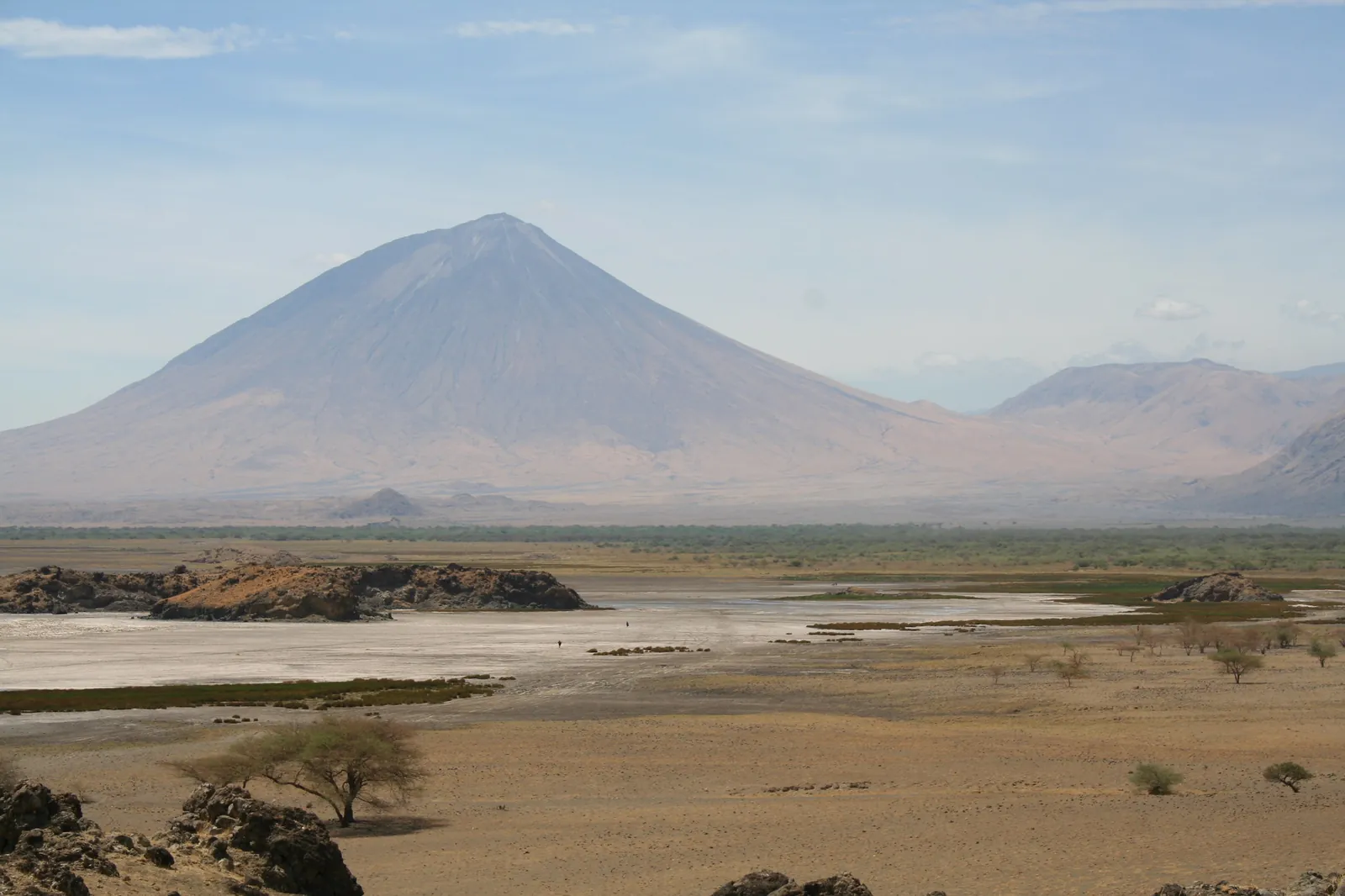
Rising from the plains south-west of the lake, Ol Doinyo Lengai is called the Mountain of God in the Maasai language and is sacred to the Maasai. It is an active volcano that has erupted an unusual lava known as natrocarbonatite, which is much cooler and more fluid than ordinary volcanic lava and turns pale grey when it cools.
The ascent is steep, loose and exposed, and it is normally done overnight, starting around midnight so that you reach the crater rim at sunrise and are back down before the heat builds. It is a serious physical challenge rather than a stroll, and conditions at the crater vary with volcanic activity. Local guides and rangers decide on the day whether a climb is advisable. Anyone with a fear of heights or poor knees should treat it as optional; the views of Natron from the lower slopes are already memorable.
The Engare Sero gorge, close to the lake, is one of the most popular day walks. A local guide leads you along a stream that cuts through the rock, wading through shallow channels to reach a waterfall and pool where you can swim. It is a refreshing break from the heat and a good option on the day after the volcano climb.
Walking is a major part of a Natron stay. The area is not a conventional game-drive park, so there are no big-cat sightings to chase, but the region supports gazelles, zebras, ostriches and a good range of birds. Walking safaris with a local guide give you time to read the landscape properly. The surrounding villages are Maasai, and a short visit, arranged through your lodge or camp, is more meaningful than a stop at a roadside stall.
If you are building a walking-focused trip, see our guide to walking safaris and trekking expeditions for how we plan the physical side of longer itineraries.
Lake Natron is a long, rough drive from Arusha, usually through the Rift Valley escarpment and the Engaruka area, and many travellers split it with a night at Lake Manyara or Ngorongoro. A 4x4 and a driver-guide who knows the route are essential, and the road can be impassable after heavy rain.
It works best as a three-night extension at the start or end of a Northern Circuit safari. A typical sequence is Tarangire, Lake Manyara, Ngorongoro, Serengeti, then a final stretch at Natron before returning to Arusha, or the reverse. Our 7-day Northern Circuit safari shows the classic loop, and a Natron extension can be added on request.
Natron is hot, particularly between midday and late afternoon, so plan walks for early morning and evening. Carry far more water than you think you need, wear sun protection, and use sturdy closed shoes for the lava and rock. The alkaline water is harsh on skin and eyes, so do not swim in the lake itself; the gorge pool is the swimming option. Check our health and safety guide and packing list before you travel.
Natron rewards early risers. At sunrise the soda flats turn rose and gold, and the volcano is often clearest before the haze builds. Bring a polarising filter for the lake surface, a long lens for flamingos and a wide lens for the landscape. Keep gear sealed against fine dust and salt.
Frequently Asked QuestionsLake Natron is in northern Tanzania, in the Arusha Region, close to the border with Kenya. It lies at the foot of the active volcano Ol Doinyo Lengai.
There is no fixed month. Lesser flamingos breed when water levels, salinity and food supply allow, so numbers change from year to year. We check recent conditions with local guides before finalising a Natron stay.
Yes, with a local guide. The climb is steep and usually done overnight to reach the crater at sunrise. It is physically demanding and conditions depend on volcanic activity, so the decision is made on the day.
Not as the main focus. It is best as an extension to a conventional Serengeti and Ngorongoro safari, for travellers who want landscapes, walking and a quieter corner of Tanzania.
Two nights is the minimum for the lake and gorge. Three nights allows a volcano climb and a rest day.
The classic Tanzania loop, well paced.
Explore →Pair it with the crater floor and the highlands.
Explore →The wider Northern Circuit context for this stop.
Explore →Parks, seasons and routes across the country.
Explore →Tell us how active you want to be and we will build Natron into the right route and season.